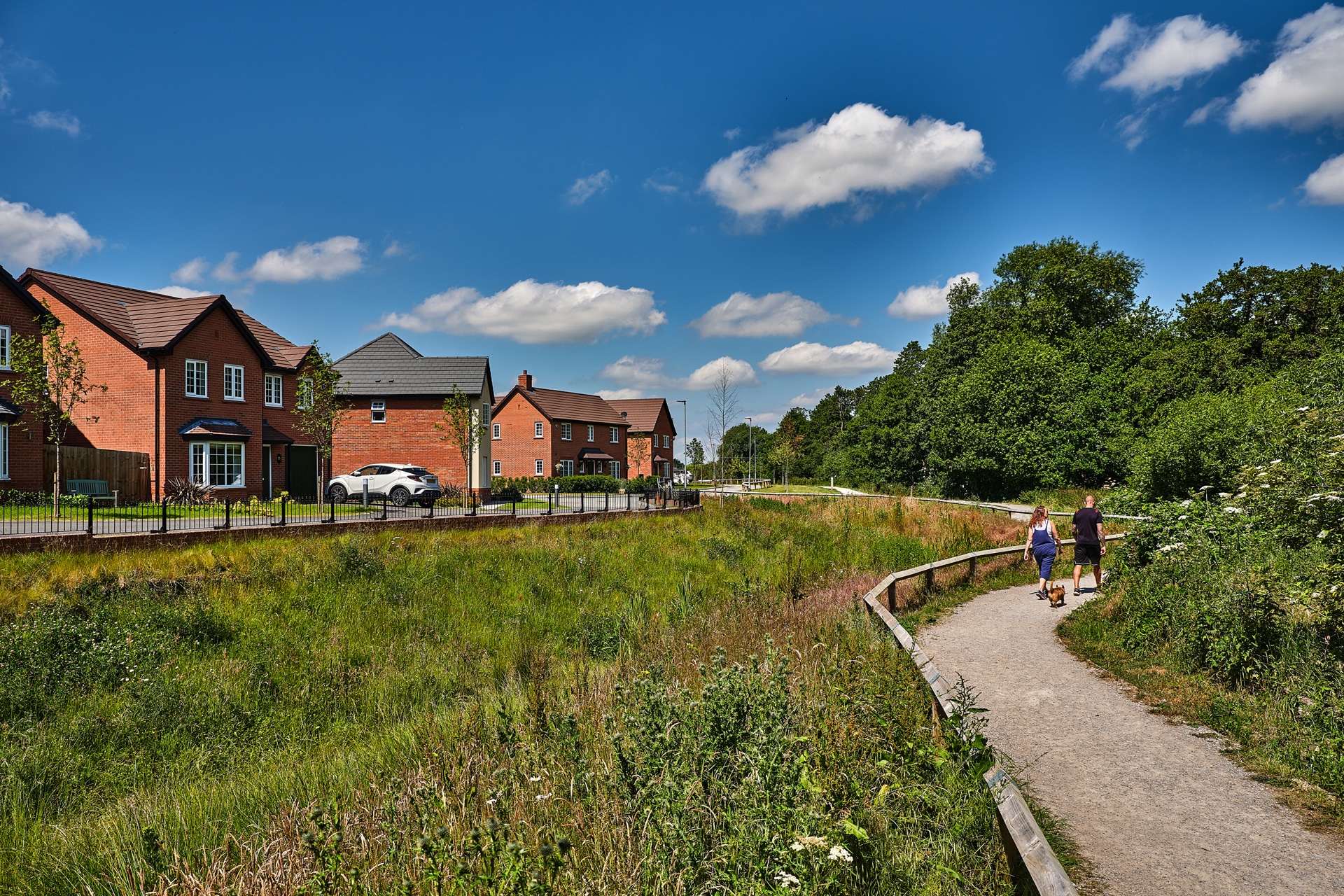
The proposals have been shaped by an appraisal of the landscape and character of the area.
This early work has allowed for the proposals to be landscape-led, responding to local context and respecting the site’s characteristics.
The site is located next to the Hog’s Back, which marks the edge of the Surrey Hills National Landscape. It also lies within the lower slopes of the Hog’s Back and forms part of the landscape setting into Tongham. With this in mind, the proposals have been designed to:
The Landscaping Strategy Plan illustrates how planting, open spaces, and green infrastructure will be designed to enhance biodiversity, create attractive surroundings, and integrate the development sensitively with its landscape setting.

Respect key views
Towards the Hog’s Back and integrate open space and planting to maintain a visual connection with the wider landscape.

Retain and enhance existing mature hedgerows
That define historic field boundaries, helping to create a sense of place.

Incorporate mature trees and ponds
At the heart of the site as focal landscape features which will also increase biodiversity

Strengthen the landscape setting of Tongham village
By using green spaces and trees to make sure the new homes blend in naturally.

Enhance the public footpath network
By maintaining and improving routes through the site that offer views and enjoyment of the landscape, whilst providing additional routes for pedestrians.


Through this landscape-led approach, the proposals achieve a balanced integration of the new development with the site’s existing environmental and visual qualities. Ensuring that the design is guided by an understanding of the site’s character and its relationship to the Hog’s Back, wider Surrey Hills National Landscape and Tongham village.
Large areas of green open spaces are planned throughout the development to support nature, and wildlife. Taylor Wimpey’s aim is to preserve and enhance the natural environment by improving wildlife habitats and promoting biodiversity throughout the site.
New planting is proposed throughout the development area including street scenes, new trees and shrubs in the green open spaces and other areas of public open space. The wooded area at the top of the recreation ground is outside of the site boundary and would be retained. The development could include financial contributions to make improvements to the woodland including habitat improvements and enhancement and the creation of new and improved footpath connections through the woodland into the development area and public open spaces.
The southern part of the site will feature a large area of open green space giving new and existing residents greater opportunities to enjoy the outdoors and connect with nature, with new walking and cycling routes and areas to relax and explore.
This area is important not only for biodiversity but also in landscape terms as part of it lies within the National Landscape, meaning it is protected for its distinctive character.
Taylor Wimpey’s aspiration for this area is to create a sensitively landscaped and accessible space that protects and enhances existing habitats, whilst delivering new and important habitats for local wildlife. This area will be managed to maintain and improve the value of new and existing habitats over time.